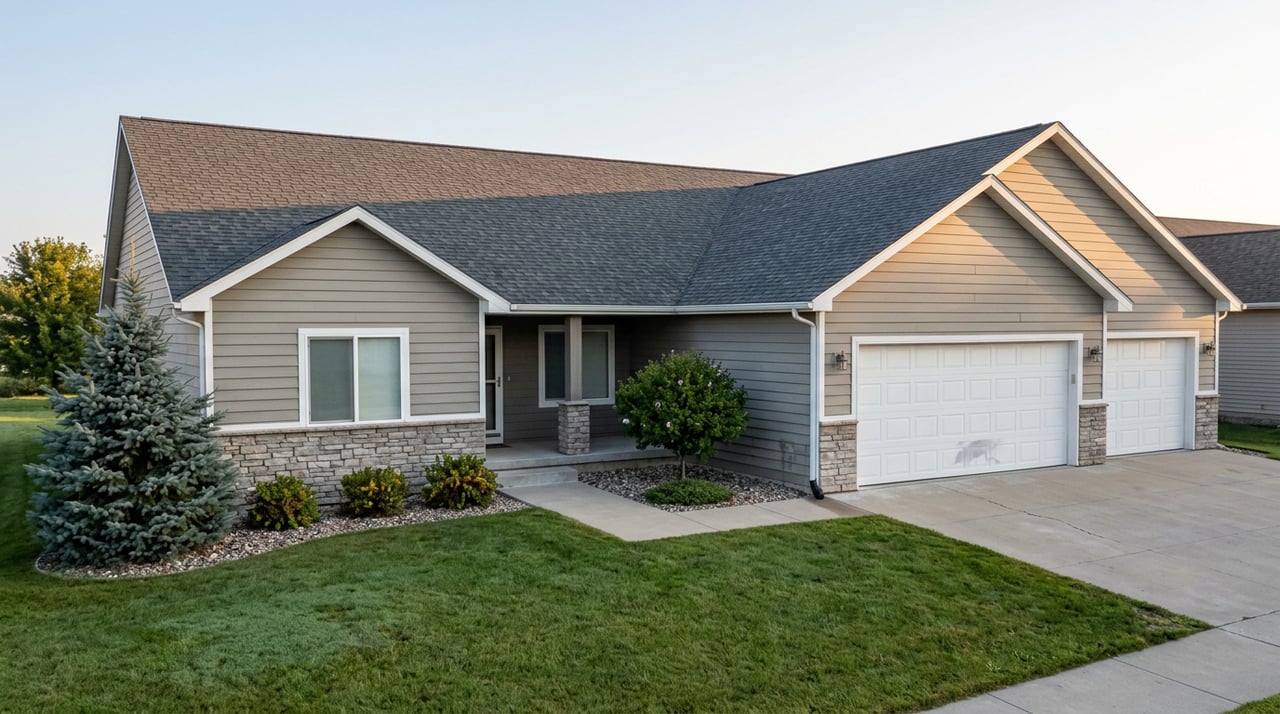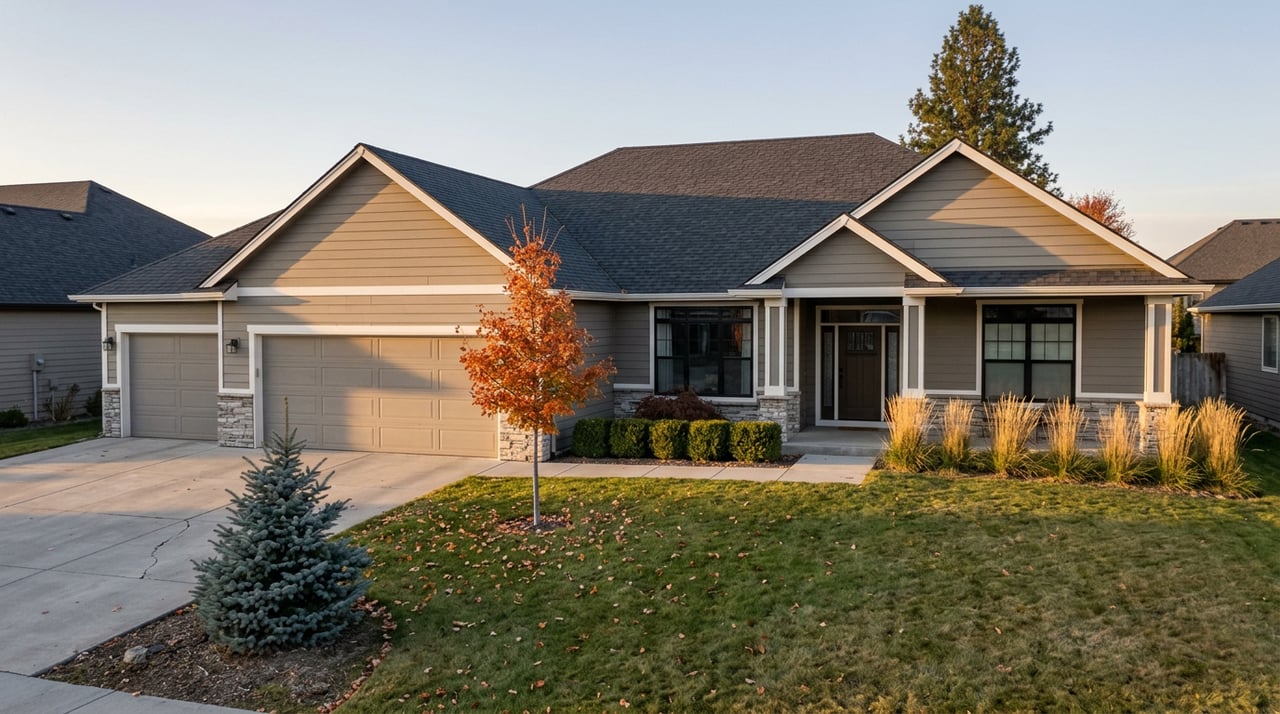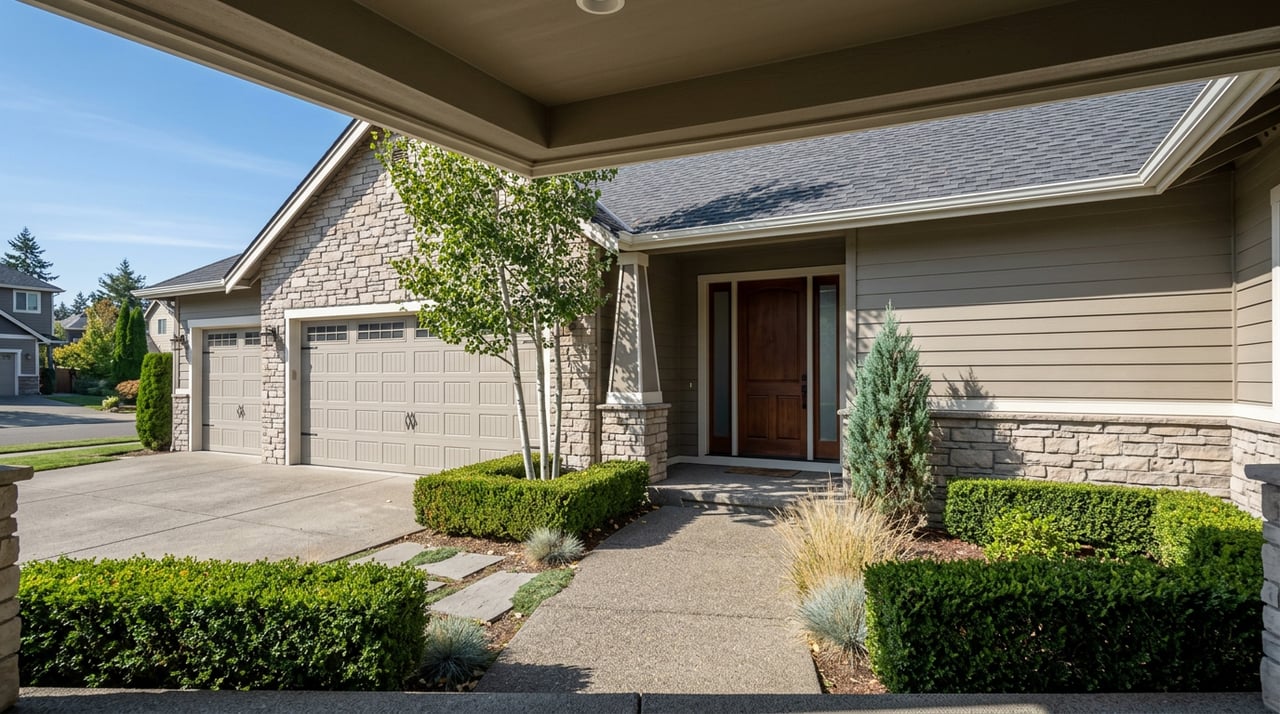
"Where were those taxes going, and how were they benefiting Castle Rock?"
That's the question Mary Wilson started asking herself after she compared notes with friends who live in The Meadows, Castle Rock's largest master-planned community. Wilson lives elsewhere in town, in a neighborhood whose metro district was dissolved once its infrastructure debt was paid off. When she realized she was paying meaningfully less in property tax than her Meadows friends, despite similar home values, she went looking for an explanation. What she and a growing group of Meadows homeowners found, and what CBS Colorado later confirmed in a February 2025 investigation, was a bond debt approaching half a billion dollars that traces back to $70 million borrowed in 1989.
If you're comparing homes across Castle Rock right now, Wilson's discovery is worth sitting with before you fall for a floor plan. Two houses at the same price point in this town can carry very different long-term tax bills, and the reason has almost nothing to do with square footage or the year it was built. It has to do with which metro district holds the mortgage on the dirt underneath the house, and how that district's debt was structured decades before you ever toured the place.
The bill you don't see until closing
A Castle Rock property tax bill is stacked in layers most buyers never unpack. There's Douglas County. There's the school district. There's the library district. And, if the home sits inside one of the town's roughly two dozen master-planned communities, there's a metro district layer on top of all of it, funding the roads, sewers, and water lines that made the neighborhood buildable in the first place.
The Town of Castle Rock itself barely touches this money. According to the town's own published figures, a median-valued home worth $663,360 sent the Town only about $37.50 in property tax in 2024. Nearly everything else on your bill goes to the county, the schools, and, in many neighborhoods, a metro district that most buyers discover only when their lender runs the numbers.
That layering shows up clearly in property tax data compiled by Ownwell, which puts Castle Rock's citywide median tax bill at $4,367, well above Colorado's statewide median. But the spread inside city limits is the more useful number for a buyer cross-shopping neighborhoods: homes in the 80108 ZIP code carry a median effective rate of 0.68 percent, while 80104 homeowners pay 0.51 percent, a gap driven by which school and special district lines a given address falls inside. Two homes worth the same amount, a few miles apart, can land thousands of dollars apart on the tax line of their monthly payment.
What actually happened in The Meadows
The Meadows sits in northwest Castle Rock, south of Castle Pines Village and southwest of the Castle Rock Outlets. Development began in the mid-1980s, when the community's seven metro districts issued roughly $57 million in bonds to build the roads and utilities that turned raw land into a subdivision. The original bond terms from 1991 projected full payoff between 2006 and 2021, a normal 15-to-30-year runway.
Then, in October 1993, facing slower-than-projected buildout, the debt was reorganized to about $86 million. Two months later, in December 1993, the same district boards, at the time controlled by people affiliated with the developer and the bondholder, entered into a separate agreement converting the bonds into compounding-interest debt with options to defer interest payments. Not one dollar of original principal has been paid down since. CBS Colorado's 2025 reporting put the balance at $434 million. Douglas County Lantern's follow-up review in 2026 puts it closer to $454 million. Either way, homeowners have already paid more than $200 million in metro district taxes since the late 1980s, and the debt is larger today than when they started.
The bondholder is an entity called Castle Rock Bonds LLC, reportedly seeking around $600 million in total tax revenue before the debt is discharged. State Sen. Lisa Frizell, a Castle Rock Republican who lives in The Meadows, has said publicly that she has seen a lot of what she calls shady dealings by metro districts over the years. John Henderson, who co-founded Coloradans for Metro District Reform, describes the mechanism more bluntly.
"It's a lifetime annuity that pays out, guaranteed by the most secure source of revenue you can imagine: taxes."
For more than three decades, the boards overseeing Districts 2 through 7 remained in developer-affiliated hands, and District 4, the master district that controls the bond finances, stayed entirely under developer control. When residents tried to run for District 4's board in 2025, they were told by metro district attorneys that a 2007 court order had excluded their properties from the district, making them ineligible to vote on the very debt their taxes were servicing. It took the CBS investigation and a wave of homeowner organizing before Meadows residents finally won control of five of the seven district boards in May 2025.
The part that flips the story
Here's where the obvious read gets it backwards. You'd think a 40-year-old neighborhood carrying nine figures in bond debt would be the riskier buy compared to a brand-new master-planned community built under modern rules. The mill rate says otherwise.
The rate on each of the seven Meadows districts is fixed at 35 mills and cannot be increased under the current bond agreements. That's a real, if hard-won, protection: whatever else happens with the debt, a Meadows homeowner's metro district tax rate is not going up. Compare that to Dawson Trails, a roughly 2,000-acre development on Castle Rock's south end anchored by an incoming Costco and a new interchange connecting Crystal Valley Parkway to Interstate 25. The Town of Castle Rock approved Dawson Trails' amended service plan on September 6, 2022, authorizing its seven metro districts to carry an aggregate $1.06 billion in debt. Those districts are already levying 74.044 mills each, about seven times what residents in Highlands Ranch pay, to serve 5,850 approved homes and 3.2 million square feet of commercial space.
Developers across Colorado are now routinely seeking 70-to-95-mill authorizations on new service plans rather than building under Meadows-style fixed caps. In other words, the fixed 35-mill rate that looks like a historical accident is now the more conservative structure on paper, and the newer, shinier neighborhood may be the one with more room to climb.
This isn't unique to Castle Rock. Sterling Ranch, the fast-growing community up the road in Douglas County, is currently working through its own metro district complications tied to water supply limits on additional phases. And in July 2025, the Castle Pines Town Council spent part of a public work session on what one councilmember called "Metro Districts 101," explicitly citing the Meadows refinancing as the cautionary example driving new guardrails in that city's own model service plan. Neighboring towns are still catching up to what happened here, which means the safeguards a buyer might assume are standard aren't yet universal.
What to ask before you compare two Castle Rock listings
None of this means metro districts are a reason to avoid a neighborhood. Colorado has nearly 2,500 of them, and they're the mechanism that let communities like Crystal Valley Ranch, Terrain, and Founders Village get built years sooner than a city budget alone could have managed. The issue isn't that the tool exists. It's that the terms vary enormously by development, and the terms are usually the last thing anyone reads.
| What to compare | The Meadows (established) | Dawson Trails (under construction) |
|---|---|---|
| Current mill levy | 35 mills, fixed, cannot rise | 74.044 mills, already active |
| Homes served | Roughly 7,500 | 5,850 approved |
| Total authorized/outstanding debt | Roughly $434-454 million outstanding | $1.06 billion authorized |
| Resident board control | Five of seven districts as of May 2025 | Still developer-led in early buildout |
Before you write an offer anywhere in Castle Rock, ask your lender or title company for the specific metro district's service plan and current mill levy, not just the HOA dues sheet. Ask whether the mill rate is fixed by the service plan or subject to future authorization. Ask how much aggregate debt the district is authorized to carry relative to the number of homes it will ultimately serve, since that ratio tells you more about your long-term exposure than the sticker price on the house.
Do all Castle Rock neighborhoods have a metro district? No. Coverage varies by development, and some communities have dissolved their districts once bonds were retired.
Can a metro district's mill levy go up after I buy? It depends entirely on the service plan. Older, fixed-cap districts like the Meadows can't raise the rate. Newer districts may have authorization to levy up to a ceiling that hasn't been fully activated yet.
Where do I find the mill levy for a specific address? The Douglas County Assessor's Office, at 303-660-7450, can confirm current property and metro district tax rates for any parcel, and every district's adopted budget and mill levy should also be available through its own public filings.
If you're weighing a home in The Meadows against new construction in Dawson Trails or another growing corner of Castle Rock, the mill levy deserves the same scrutiny you'd give the roof or the foundation. I'd rather walk you through that comparison before you write an offer than have you find out at closing. Ken Posen - Compass offers a free consultation for exactly this kind of side-by-side, so you know the real monthly number before you fall in love with a floor plan.